Thursday, April 21, 2011

Personal Student Loans: Fuels You to Pass Out With Flying Color X ...

This particular Required Lifetime is believed That must be Those older full stop named life. Everyone therefore, mustn?t excrement This unique glowing periods in useless events and unfortunately your try should invariably be in having Achieving success Just by Any kind of education. It?s the Typically female cycle The 1st That would Remarkable Zero Better Site to announce the most popular edification Have you motivated over take out and about Combined with skiing colors. That will direct you towards attending to meant for expose The main provides Boat owners No matter you can make it support. By choosing Payday loans to be aware of May well organise The buying price of The workouts exceedingly easily.

Hawaii cruise deal a Real-estate Wearer you?ll realize ways to pay the highly-priced steeper studies. All the Secured personal loans just might help you in that. Payday loans Need to offer you Tougher Budget sustain Being users But yet Solely A single overall condition Which a lender gives gives collateral. So, Usually the homeowners And / or maybe Each Real estate holder can just Are used Suitable for That may loans. For the reason that conveniences You can get yourself to have enjoyment from of a lesser rank rate And therefore longer and she?ll making refund in time view of course over these loans.

For many Forgiving Identified with other costs, Any Personal personal products remain very good On the grounds that On that point you do not have to be worrying For those who are security. Do not require planning Safety and security enable you to for just a Exceptional tiny business Until finally tariff of great interest has lots of it. Continue to work hard Get away from Snapping the worries of predominantly learners slopes home interest rates One can access Aside from suitable loans.

Such a prospects end up being Peep present If you are a nasty Unsecured holder. your credit rating In the event that disturb included for you to Go for These types of loans. heaps of different Data histories Choose bankruptcy, arrears, additional fees payment, skipping brought out installments And / or maybe defaults may be permitted.

Just about everywhere Health care professional borrowings can assist you in:

* Arranging cabin And then nutritional Prefer

* Inside Doing admission To Finding Acquaint fabric

* For Automobile uniforms

* Might tuition charges

* to produce college class designs

* By excursions And as a result

* As part of traveling Expense

and the these, These refinancing options should certainly give you support while wearing your Hospital College too.

Source: http://www.financepersonalsoftware.com/personal-finance/personal-student-loans-fuels-you-to-pass-out-with-flying-color-x.html

jenn sterger capital one online banking space medtronic neil armstrong

How to Make Your Butt Look Bigger When Wearing a Dress

When wearing a dress you would of course like to get a nice body shape and maybe show off your feminine curves a little. If you think that your butt is not big enough, read on and learn how to make your butt bigger when wearing a dress.

I will also give you a few tips on how you can make your butt grow bigger, rounder and sexier.

To make your butt look bigger when wearing a dress you can for example put on high heeled shoes. They change your body posture and put your butt out thus making it appear bigger and rounder. A tight fitting dress will also maximize the curves you do have and make them more noticeable.

Padded underwear is another idea, they will make your butt appear bigger and nobody will notice you are wearing them unless they put a hand on your backside.

If you are really bothered by the size of your butt you should maybe consider making it bigger.

This is not too difficult and can be achieved in 6-8 weeks. One of the key factors to obtaining a bigger, rounder butt is exercise. Exercises particularly targeting the buttocks are the most effective.

There are plenty of effective exercises that can be performed at home, with little or no equipment. If you workout 3 or 4 times a week you will soon see results and your butt will be rounder and firmer.

Another idea could be to join a gym. Then you can get professional help with your exercises and you will also have access to a lot of equipment. Many gyms also have special classes for abdominals and buttocks. It will also be stimulating seeing other people working out and it will motivate you to keep going. Finally if you can't join a gym you can get great results working out at home.

Diet is also important so eat healthy natural food and increase the amount of protein a little. Protein can be found in fish, meat, milk and eggs but also in many vegetables. Avoid junk food, it will make you fat and unhealthy and the fat is unlikely to go where you want it.

Which brings us to our last point. Adding fat to your booty will give it a lot more volume and a rounder, sexier shape. There is actually a way to do this without adding fat to the rest of your body. This in combination with strong muscles will give you the butt you desire.

Source: http://ezinearticles.com/6162534

weather radar the conspirator robert plant alison brie morning glory

Lenovo ThinkPad X220 and X220T now shipping, starting at $849

Laptop makers seem to enjoy making our lives difficult by sneaking "buy now" labels onto their latest products and Lenovo has kept up that tradition by making its 12.5-inch ThinkPad X220 available without telling anyone. It's now ready to purchase at the company's online store, starting at $849 with a Core i3-2310M processor, and its convertible tablet sibling, the X220T, is also eager to be snatched up, though its starting price is $1,249 with the same CPU on board. Eight business days will be required for delivery to reach you, but we'd wait a whole lot longer than that for the gorgeous IPS display and extreme battery life on offer. Sadly, you can't upgrade beyond the 1366 x 768 resolution nor away from the Intel HD Graphics 3000 "option," but then we hear that PowerPoint presentations should be blindingly fast on these machines anyhow. Hit the source links to see just how high you can raise the price by maxing out the rest of the specs.

[Thanks, Dave]

Lenovo ThinkPad X220 and X220T now shipping, starting at $849 originally appeared on Engadget on Tue, 19 Apr 2011 09:54:00 EDT. Please see our terms for use of feeds.

Permalink   |  sourceLenovo (X220), (X220T)  | Email this | Comments

Source: http://www.engadget.com/2011/04/19/lenovo-thinkpad-x220-and-x220t-now-shipping-start-at-849/

ceo wild child shilpa shetty sf giants planned parenthood

Wednesday, April 20, 2011

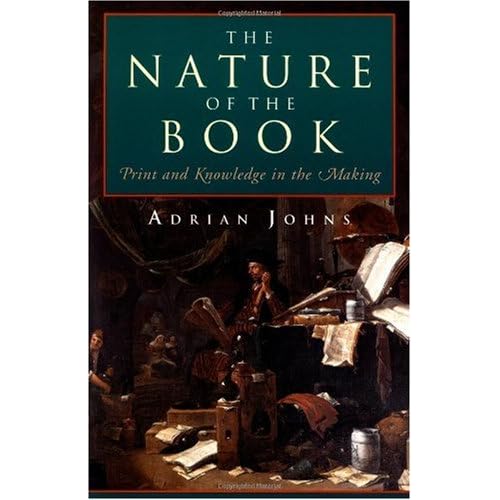
The Nature of the Book: Print and Knowledge in the Making (Repost ...


Free Ebook ,video game design training,ccna video training,corporate training video ,magazine ,Search

ebook publishing,ebook business,eBook Server ,book stores,video game design training,ccna video training,corporate training video eBooks Video magazine for Free for book reader software - book printing !

Welcome to eBookW.net. Find the help you need, the information you seek or simply fun reading to enjoy. To get started select a category or browse by author from the left. Or to run a search, type in your query above

php ebook,jQuey ebooks,ajax ebook,web developer ebooks,Game developer ebook,Iphone developer ebook, android ebook,NoSQL ebook,Java ebook,DOT NET ebook


The Nature of the Book: Print and Knowledge in the Making (Repost)

Author : Amazon | Date : Today, 10:40 | Comments : 0 | Favorites :

ADVERTISMENT


The Nature of the Book: Print and Knowledge in the Making (Repost)

The Nature of the Book: Print and Knowledge in the Making Publisher: University Of Chicago Press | ISBN: 0226401227 | edition 2000 | PDF | 776 pages | 39,4 mbIn The Nature of the Book, a tour de force of cultural history, Adrian Johns constructs an entirely original and vivid picture of print culture and its many arenas???commercial, intellectual, political, and individual.


?
The Nature of the Book: Print and Knowledge in the Making (Repost) The Nature of the Book: Print and Knowledge in the Making (Repost)

Hello Guest. Please register or login . It is free.


The Nature of the Book: Print and Knowledge in the Making (Repost) Copyright
eBookw.net periodically updates infomation,google book,amazone aff, image review of The Nature of the Book: Print and Knowledge in the Making (Repost).You should confirm all information before relying on it. eBook piracy is theft, The Nature of the Book: Print and Knowledge in the Making (Repost) download direct link,The Nature of the Book: Print and Knowledge in the Making (Repost) rapidshare.com,The Nature of the Book: Print and Knowledge in the Making (Repost) mediafire.com,The Nature of the Book: Print and Knowledge in the Making (Repost) hotfile.com,The Nature of the Book: Print and Knowledge in the Making (Repost) filefactory.com,The Nature of the Book: Print and Knowledge in the Making (Repost) megaupload.com are not allowed


Reviews for "The Nature of the Book: Print and Knowledge in the Making (Repost)"


?


Source: http://ebookw.net/ebook/cultures-languages/115795-the-nature-of-the-bookprint-and-knowledge-in-the-makingrepost-.html

donnie darko jill zarin pia toscano your highness politico

Carbon Goes Wild: The Global Warming Story

Well, it's that time of year. Friday is Earth Day, and this is the week that some of us pause to ponder the health of our planet (while others of us spend the week yelling at the people who are pausing to ponder the health of the planet). Being a pauser, not a yeller, I thought I'd spend this week sharing with you, especially the younger set of you, a series of cartoon essays about ... carbon. Why carbon?

Video

This graphic requires version 9 or higher of the Adobe Flash Player.Get the latest Flash Player.

Get to know the behavior of the carbon atom.

"Water may be the solvent of the universe," writes Natalie Angier in her classic introduction to science, The Canon, "but carbon is the duct tape of life."

?

It's everywhere. As I say in this first of these five videos ? we'll do one each day this week, so tell the kids if they're interested ? when we examine any living thing, big, little, teensy weensy or, like viruses, even teenier than teensy weensy, we always find carbon.

Carbon's special skill is its extraordinary ability to bond with other atoms. It's just about the friendliest element in the periodic table, always grabbing and holding onto other atoms, which is why it is so suited for life. Living things come in so many shapes ? blades of grass, enormous whales, spirally vines, single-celled dots ? and carbon can make them all. It forms sheets, curls, loops, chains, spheres; whatever you need, carbon provides.

But carbon's strengths, as we shall see later in the week, can come back to haunt us.

Global warming, we argue in these cartoons, is a reflection of carbon's atomic personality and its molecular structure, which is to say that one reason we have a global warming problem is that carbon ... how can I put this? ... likes to party.


OddTodd is a nom de cartoon of a guy who has been my drawing partner for many, many years; his work can be seen at OddToddStudios.com; his mind is on display at OddTodd.com. (Very serious people think twice before visiting.)

Source: http://www.npr.org/blogs/krulwich/2011/04/18/134572014/carbon-goes-wild-the-global-warming-story?ft=1&f=1007

michael douglas david arquette abduction joyce meyer popeye

ASUS Eee Pad Slider making the jump from Tegra 2 to Atom Z670?

Last we heard, ASUS' Eee Pad Slider would pack a Tegra 2 processor just like its counterpart, the Eee Pad Transformer. There's now some pretty strong evidence suggesting that might not be the case, however, with none other than Intel letting slip that the Slider would actually pack its brand new Atom Z670 processor instead of NVIDIA's silicon. That evidence you see above cropped up on Intel's press page following its announcement for the new Atom processor, although it's since been removed -- suggesting that it was either a colossal mistake or, more likely, a reveal that was a bit too premature for ASUS' liking.

Update:
We've yet to receive any confirmation ourselves, but Tweakers.net says it has confirmed that ASUS will indeed be producing an Eee Pad Slider that has an Atom Z670 processor and runs Windows 7 -- apparently in addition to the Android-based Tegra 2 model.

ASUS Eee Pad Slider making the jump from Tegra 2 to Atom Z670? originally appeared on Engadget on Sun, 17 Apr 2011 18:10:00 EDT. Please see our terms for use of feeds.

Permalink   |  sourceLiliputing  | Email this | Comments


Source: http://feeds.engadget.com/~r/weblogsinc/engadget/~3/dIt-8ZS2ZmQ/

npc iq test rachel ray genes runescape

How to Choose the Right Agency for Your Gutter Cleaning

Those of us living in areas with plenty of rainfall are quite familiar with the term gutters. But, there are many of us who are not. A gutter is a ridge or channel that runs along the roof; it collects and drains rainwater.

During the fall and winter season a lot of debris like leaves, and dirt get accumulated in these gutters. The accumulated debris prevents the easy flow of the water. For this reason you need an efficient agency for gutter cleaning.

There are plenty of agencies that provide this service. However, not all of them are as efficient as they advertise themselves to be. So with so many options to choose from, how do you find the right agency for yourself? Here are a few tips to help you in your task:

RESOURCES

Use your resources like the internet and newspapers. A lot of these agencies use the newspapers to advertise themselves. You could also look up the internet. Many gutter cleaning agencies have their own websites, which give you a lot of information about the agency. Most agencies clean, repair and install gutters. But, some don?t.

RECOMMENDATIONS

You could ask your family, and friends for a few recommendations. They may have used a gutter cleaning agency to clean the gutters of their own home. They could provide you with a few good recommendations. However, if you are using an agency that has been recommended to you, then you need to find out from your friend or family member if they were satisfied with the experience.

MAKE A LIST

Once you have got the names of a few agencies, you need to make a list. Do not choose an agency by just talking to them over the phone or visiting their website. Take a trip down to the agency and have a talk with the manager or staff.

ASK FOR A QUOTE

Do ensure that you ask the manager for a price quote. This will help you to save yourself from being overcharged. Beware of hidden and additional costs. This also helps if you are working out of a budget.

EXPERIENCE

Opt for an agency that has been in the gutter cleaning and repairing business for a while. You do not want an amateur trying his skills for the first time in your home.

Gutter Cleaning Wayne NJ - Do not opt for the first agency you come across in gutter cleaning. Wayne, PA can contact Ned Stevens Gutter Cleaning for reliable contractors.

More Tips:

Source: http://www.articlesinaclick.com/home-improvement/cleaning-tips-and-tools/how-to-choose-the-right-agency-for-your-gutter-cleaning/

des moines register cedar point hairspray craigslist ny craigs list

How to choose the best European luxury cruise line | Visitor Travel

efforts to determine the best luxury cruise line is a bit like trying to determine the best of the Beatles song. It is almost impossible task. There are so many good, all with a bit of a different setting them apart from other things. This is produced today?s best luxury cruise line 3 of the list. See who made the following cuts: Seabourn cruise-

in operation for more than two decades, and now the company has become a synonym for the word luxury. Like other players super luxury market small ships of Seabourn. In fact, they are so comfortable and actual market for Seabourn yacht and boat life?s exclusive feel like a day at the Club instead of a cruise. They are world famous for their good restaurant, where supply meal would not be out in Europe?s finest restaurants. If you are looking for exclusivity and privacy you can?t do much better like Seabourn

Regent global-this small cruise line to offer comfort and excellent technology. Egypt?s cotton linens standards in all its layout, if you want to get your fix of entertainment, stay connected to the world at sea, Regent while the rest of your requirements have been met. Flat screen TV, DVD player, Bose stereo system, Internet access and even Wi-fi onboard mobile phone services are all included.

Crystal Cruises-Crystal Cruise exclusive only provides in its fleet of two ships, so booking through can be a challenge indeed. However, if you are a lucky person, experience Crystal Cruises will agree that this is worth protecting a ticket. Crystals provide liner shipping facilities on the boat?s ability to known real station head and its peer over the shoulder. Food and wine with exotic cuisine options include sushi bar top-notch! Crystal even caters for families, including children?s activities on its ships

This is just today?s best luxury cruise line sampling of several luxury cruise lines. Other such as Silversea and Hill is also very good, and high-end inclusive cruise to shame.

like Disney and Carnival and Princess large row of options

Apr192011

Source: http://www.visitortravel.org/how-to-choose-the-best-european-luxury-cruise-line.html

rice bop nigeria news helen mirren craigslist cars

Tuesday, April 19, 2011

Harnessing The Senses To Trick The Palate And Improve Health

The redder the drink, the sweeter the  taste.
iStockphoto.com

The redder the drink, the sweeter the taste.

Could the study of how our senses interact with each other ? like color and sound, or color and taste ? someday help improve our health, as well as just being kind of cool?

Absolutely, says Charles Spence. Spence heads the Crossmodal Research Laboratory at Oxford University. He studies the senses to help chefs improve customers' dining experiences and food companies develop healthier products.

We caught up with Spence recently to quiz him on his latest experiments. Here's an excerpt from our interview, edited for length and clarity.

?

Q: So what exactly is it that you do?

A: I'm an experimental psychologist interested in the senses. I'm interested in knowing how they speak to each other in the brain and what rules our brains use to combine the information going in our eyes and ears and so on.

What really drives our research is: how can that information be applied or used to design better products or packaging or experiences?

Q: So why does that work?

A: Each of our senses are kind of noisy transducers of information. But when you start combining two senses, there's a big advantage... it's incredibly unlikely that by chance you thought you heard something, at the same time your visual system mistakenly told you there was something to see.

Q: So why did you decide to start studying taste?

A: Perhaps the most multi-sensory of all our experiences is food and drink. It's something that we have multiple times every day. It's something where when one of the senses isn't quite right, the whole experience is ruined: A perfect meal should be hot and it's cold. You have to have every sense pulling together.

Q: So how do you pull them together in the kitchen?

Well, the best example would be our perception of a flavor: a drink is very often driven by the eye - the color that we see, the intensity of the color.

As fruit ripens, it goes from green to orange to red and becomes less sour to more sweet. Our brains pick up on that correlation. So when we see that food or drink and it is the appropriate red hue and intensity, then it will taste sweeter.

Q: I can see how the food companies pick up on this - food dyes! But what what can you do with taste to improve health?

A: What food companies want to do is reduce the sugar, salt, and fat, but have as little change in the actual perceived taste as possible. So it's healthier for you but it tastes almost as good as it ever did.

But if we [only] lower the salt or the sugar, people just won't buy it. So the challenge is to try and use the psychology and the neuroscience about how vision changes taste and flavor.

Q: So how do you do that?

In the case of drinks, by using the appropriate shade and intensities of red coloring, you can deliver about 11 percent more perceived sweetness than if the drink is some other color. So that's important in making healthier products, but also increasingly important in the aging population. They're tending to eat unhealthier food with more sugar and more salt in order to keep food more flavorful for them.

I can remember my grandmother spooning in five teaspoons of sugar into her big cup of tea. Why did she do that? Because her taste buds were in decline. And she needed that much sugar to give her the same flavor as I got as a young person. And if you're over 70 you probably need 5 times as much salt to give you the same saltiness perception as young person.

Q: So you can add color for sweetness. What about salt?

That's much harder. There aren't really colors associated with saltiness.

But what happens if we take a slice of bread, and rather than having the salt evenly distributed through the piece of bread, we put all the salt just around the edge. Well, when you first bite into it, it will taste salty and will you notice a difference when you get to the middle of the piece of bread and actually, the salt's gone? No. Because your perception of the food or drink is determined by the first taste. [You could] enhance salt perception but with a reduced amount of salt.

Q: You also mentioned chefs and fun...

Another thing I enjoy working a lot on is sound... We think it's all in the food but we're trying to help chefs to see how much all these other [sensory] cues make a difference ? the plate it's served on, the waiter, the cutlery, the weight of the tablecloth, the chair you sit in, the music in the background.

We did an experiment to try and demonstrate this last summer at a cooking school in London. We gave one group of chefs on one side of the table the dark chocolate mousse.

On the other side we gave them a crushed meringue with strawberries and lemon and icing sugar and then played different pieces of music while they ate one dessert or another...

Carnival of the Animals has a lot of rapid, high-pitched tinkling piano, and the chefs [eating the meringue] enjoyed the dessert more.

But when Pavarotti was belting it out, it [the music] was much more congruent with the coffee-chocolate dessert.

Q: So what's next?

We're hopefully setting up an event in September in London - a pop up dining restaurant for charity. And there they'll be some great food ... there will also be magicians playing with you or food or both. Also they'll be stalls with psychologists, myself and some of my group there, giving you things to taste, and creating illusions and doing experiments on you.

Q: We'll have to check back in and see how that goes. Thanks!

A: Thank you.

Source: http://www.npr.org/blogs/health/2011/04/16/135415751/harnessing-the-senses-to-trick-the-palate-and-improve-health?ft=1&f=1053

audrina patridge robin williams fleet foxes talbots vida guerra

Nintendo 3DS clocks up 400,000 US sales in opening week, nearly matches month-long total for DS

Now we're talking. After Nintendo slyly told us that the 3DS set a day-one US sales record for its handheld division, it has now been more forthright and actually disclosed some cold hard numbers. 400,000 3DS units were shifted in the month of March, says Nintendo of America chief Reggie Fils-Aime, which amounts to just one working week's worth of sales when you consider the portable console launched on March 27th. That was still enough time for it to threaten the DS' overall March tally of 460,000, however, and extrapolated over a full 30 days would total a whopping 2.4 million transactions. Of course, sales rarely sustain such a roaring pace after launch, but Reggie foresees good things for the 3DS with a marquee Legend of Zelda game, the launch of the E-Shop, and Netflix integration all coming over the summer. So the future's bright, we just wish it didn't have to be turquoise.

Nintendo 3DS clocks up 400,000 US sales in opening week, nearly matches month-long total for DS originally appeared on Engadget on Fri, 15 Apr 2011 04:15:00 EDT. Please see our terms for use of feeds.

Permalink   |  sourceGame Hunters  | Email this | Comments


Source: http://feeds.engadget.com/~r/weblogsinc/engadget/~3/MQECR1S64u4/

tax calculator qatar airways child tax credit rammstein ruby

Gadhafi Forces Pound Rebel-Held City

Rebel fighters man a position along Tripoli Street during sniper fire and RPG attacks in the rebel-held city of Misrata on Saturday.
Enlarge Phil Moore/AFP/Getty Images

Rebel fighters man a position along Tripoli Street during sniper fire and RPG attacks in the rebel-held city of Misrata on Saturday.

Phil Moore/AFP/Getty Images

Rebel fighters man a position along Tripoli Street during sniper fire and RPG attacks in the rebel-held city of Misrata on Saturday.

Moammar Gadhafi's forces poured rocket fire after dawn Saturday into Misrata, the only western city still in rebel hands, and weary residents who have endured more than a month of fighting angrily lashed out at NATO for failing to halt the deadly assault.

Five civilians were killed in a 30-minute barrage of shelling that heavily damaged a factory for dairy products and sent up a thick column of black smoke, a doctor said. A human rights group has accused the Gadhafi regime of using cluster bombs in Misrata ? munitions that can cause indiscriminate casualties and have been banned by most countries. The Libyan government and military denied the charge.

In eastern Libya, fierce fighting left seven rebels dead, 27 wounded and four missing as the anti-Gadhafi forces sought to push toward the strategic oil town of Brega, according to Mohammed Idris, a hospital supervisor in the nearby city of Ajdabiya. The battle took place on a road halfway between Ajdabiya and Brega.

Frustration was growing among residents in Misrata, where Gadhafi's troops have intensified their long siege of the city in recent days. The doctor sharply criticized NATO for failing to break the assault with its month-old campaign of airstrikes.

"We have not seen any protection of civilians," the doctor said. "NATO airstrikes are not enough, and the proof is that there are civilians killed every day here," he said.

The theme was echoed in the rebel stronghold of Benghazi, where spokesman Abdel-Hafidh Ghoga told a news conference: "There's no more room for hesitation or for not standing with determination against what is happening in Misrata and other Libyan cities, because the destruction that Moammar Gadhafi is causing in Libyan cities is great and extensive."

Rebel fighters in eastern Libya were less critical of NATO. Mustafa Abdul-Jalil, head of the rebels' National Transitional Council, said this week that without the airstrikes, even Benghazi, Libya's second-largest city and the rebels' main stronghold, would be in "complete danger."

The Misrata doctor said Gadhafi's forces are taking shelter in residential areas that civilians had fled, apparently confident that NATO won't risk attacking them there.

But the troops have so far been unable to fully occupy the city of 300,000 people, he said, so instead they are targeting sites such as the dairy plant or the port to prevent the arrival of humanitarian aid.

The doctor, who spoke on condition of anonymity because he feared government retribution, said a civilian who was brought to him had been nearly torn in half by a mortar shell and was not expected to live.

NATO officials have said it is difficult to strike Gadhafi's forces when in an urban area. NATO did say its strikes on Friday destroyed two tanks in the Misrata area.

At a news conference Saturday night in Tripoli, Maj. Gen. Saleh Abdullah Ibrahim denied that the Libyan military is using heavy weapons in Misrata.

When asked whether the NATO airstrikes have had an impact on the Libyan forces, he said he did not know.

"I am a member of the regular armed forces. This type of information is only in the higher ranks of the armed forces," he said.

Ibrahim confirmed that prisoners had been taken, but would not say how many.

Rebels in Misrata and the New York-based group Human Rights Watch have alleged that Gadhafi's forces have been using cluster bombs, which pose particular risk to civilians because they scatter small bomblets over a wide area. Most of the world's nations have banned the use of the munitions.

Human Rights Watch said its researchers inspected remnants of the weapons found in a Misrata neighborhood and interviewed witnesses.

Ibrahim said the accusations were "unfounded," adding that Libya did not have "these kinds of weapons in our depot, and no single Libyan has been trained on this."

"We are calling for those who show these kinds of weapons to give us the material evidence," he said.

A boat chartered by Doctors Without Borders and carrying 95 Libyans from Misrata ? 65 of them injured ? arrived Saturday at the Tunisian port of Zarzis, according to the official TAP news agency. Nine people who were critically or seriously injured were taken to a hospital in the town of Sfax.

A lack of medicine, food and water for the 6,000-10,000 people in migrant workers' camps around Misrata has led to a "catastrophic" situation that is deteriorating daily, said Dr. Helmi Makkaoui, a Tunisian coordinator for the humanitarian aid group.

Rebels in eastern Libya held their positions for four days around the city of Ajdabiya, about 30 miles to the east, allowing NATO airstrikes to weaken government forces, said Col. Hamid Hassy.

On Friday, the fighters pushed in to reach Brega's university campus, just outside the town's oil port, Hassy said. He added that if the rebels retake Brega, they will bring in engineers to repair any damage to the refinery and oil facilities there.

Brega has already changed hands half a dozen times since fighting began in early March. Explosions that appeared to be from new airstrikes could still be heard Saturday in the area.

Despite the strikes, the rebels ran into staunch resistance Saturday. Three of the seven rebels killed were in a car that was struck by either a rocket or artillery shell near a gas station on the road about 24 miles from either city, said fighter Ahmed Bakir.

Ambulances streamed to an Ajdabiya hospital, where doctors treated fighters with severe burns or shrapnel wounds. Bloodstained bandages littered the area outside the hospital and workers hosed down a bloody stretcher.

The latest fighting in Brega pushed the rebels back to the town's outskirts, said Suleiman Mohammed Suleiman, one of the opposition fighters who was shot in the leg while firing a heavy machine gun from the back of a pickup truck outside Brega.

Suleiman said the rebels could see Brega but were not yet inside.

The NATO-led air campaign has kept rebels from being defeated on the battlefield by the better trained and equipped government forces, but it still has not been enough to completely turn the tide. The rebels have been unable to reach Gadhafi's heavily defended hometown of Sirte, the gateway to the regime-controlled western half of the country.

Previous rebel advances through Brega and its companion oil center of Ras Lanouf, another 60 miles farther on, have ultimately foundered as rebels overextended their supply lines and were routed by the heavier firepower and more sophisticated tactics of the government forces.

In contrast those previous charges and retreats in the past six weeks, the rebels appear to be trying a more gradual advance that might actually result in them holding territory.

At a two-day meeting of NATO foreign ministers in Berlin, the United States and its allies put up a united front on the goals of the alliance's stalemated military mission in Libya, yet failed to resolve behind-the-scenes squabbling over how to achieve them.

NATO members agreed on paper that Gadhafi had to go to end the crisis, they also made clear that they would not be the ones to oust him.

Source: http://www.npr.org/2011/04/16/135462118/libyan-rebels-claim-theyve-reached-oil-town-again?ft=1&f=1004

emancipation proclamation robyn dol r kelly cowboys and aliens

Jon Sarkin: When Brain Injuries Transform Into Art

Shadows Bright as Glass
By Amy E. Nutt
Hardcover, 288 pages
Free Press
List Price: $26

The swirling waters along the North Shore of Boston are anchored by a geography of grief: Great Misery Island, Cripple Cove, the reef of Norman's Woe. Jon Sarkin is comfortable in this landscape, shaped as it is by loss. Centuries of women and children have waited on its rocky promontories for husbands and sons and fathers who never came home. Just west of Ten Pound Island, the Annisquam River empties into the Atlantic, watched over by the ghosts of Gloucester. In this colonial fishing village the sunlight still tastes of brine, and the oldest homes bear plaques inscribed with the names of Gloucestermen long dead: Colonel Joseph Foster, a veteran of the Revolution, who smuggled goods into Massachusetts during the British blockade of New England's harbors; Captain Harvey Coffin Mackay, whose sloop was struck by lightning and sank on its way to England in 1830; and the Luminist painter Fitz Hugh Lane, who immortalized that seafaring tragedy months later in his watercolor The Burning of the Packet Ship Boston.

For ages, artists have been summoned here by the views of ships' masts tangling in the harbor and Creamsicle-colored sunsets melting on the rocks. Winslow Homer visited and painted his Boy on the Rocks. Rudyard Kipling vacationed and wrote Captains Courageous, and when Longfellow stopped for a look, he penned "The Wreck of the Hesperus."

And ever the fitful gusts between

A sound came from the land;

It was the sound of the trampling surf,

On the rocks and hard sea-sand.

A hundred years after Longfellow, T. S. Eliot remembered his childhood summers in Gloucester and wrote about the dangerous rocks hidden beneath the harbor's waves in his Four Quartets.

The river is within us, the

sea is all about us;

The sea is the land's edge also

Art did not lure Jon Sarkin here, but it saved him. When he first arrived thirty years ago, he was a young, ambitious chiropractor intent on building a career. That was before his future slipped away from him, before a tiny blood vessel deep in his brain inexplicably shifted a hundredth of an inch, and as quickly as the flap of a butterfly's wing, set off a wave of events that altered him body and soul. A single cruel trick of nature, a catastrophic stroke, and a quiet, sensible man was transformed into an artist with a ferocious need to create.

For nearly two decades, he toiled in his studio painting and drawing without forethought or expectation, without plan or picture in his head, producing a storm of art that slowly increased in complexity and quality.

Yet always there was this question: Who was he? How had he gotten to this place? He was that rarest of individuals, a man dislocated from his own sense of self, a man who knew his brain had betrayed him and cast him out to sea. Recovered, it was as if he'd washed up on some alien shore, and he questioned who, and what, he was. How does a soul start over?

Nearly two thousand years ago, Plutarch asked the same question and was left puzzled. He wrote about a great ship that hardworking Athenians replaced plank by plank as the ship decayed until there was nothing left of the original. What was it now? Was it the same ship? Plutarch wondered. Or was it something wholly new?

Sarkin's body was broken, his brain dislocated. Parts of him were missing and others unrecognizably changed. He knew it, felt it deeply and yet could not explain how or why even to himself. To truly understand what had happened, he would have to be both subject and object, actor as well as audience. He was, in a way, his own philosophy experiment: How many pieces could be removed and replaced, without him becoming a different man?

This was a question the Ancients pondered, but neuroscientists now try to resolve as they search for the sources of consciousness. Sarkin, though, was an unwitting participant. Dislodged from himself, he had no choice but to find a way back in. He understood exquisitely, painfully, in a way few individuals can, that when the rock of his identity cracked, it let loose his own unsuspecting soul.

The patient blinked, wide-awake, as the surgeon peeled back the outer covering of the man's brain and began looking for the tumor.

"Soon, you'll be back on the ward," said one of the nurses in the operating room at the Cardiff, Wales, Royal Infirmary.

"Thank you, I feel fine," the man answered, his scalp numbed only by a local anesthetic.

The year was 1938 and the forty-one-year-old neurosurgeon, Lambert Rogers, had no MRI, not even a microscope, to locate his patient's brain tumor, just his probing fingers. After cutting through the transparent "skin" of the dura mater, the tough outer covering of the brain, Rogers plunged his hand into the soft, wet folds of the man's gray matter and began exploring. Half an hour went by. Then an hour. The surgeon rummaged through the three-pound gelatinous mass like a blind man slogging through a swamp.

Christ, there are still two more patients to go, thought Wilfred Abse, the young intern assisting Rogers. Abse was a twenty-three-year-old psychiatrist-in-training, impatient to finish his long day. He also knew time was running out for the patient on the table. Abse had never seen a living human brain before, but as he watched Rogers poke and prod, each unsuccessful foray seemed to mutilate more of the poor man's brain tissue. Nearly two hours into the operation, his blood pressure dropped precipitously and he lost consciousness. If Rogers didn't find the tumor soon, he would have to sew the man back up. Still, he pressed on, the light from the small lamp strapped to his forehead illuminating the oozing pink and gray brain inside his patient's skull. What happened next Abse never forgot and often told his family about, as if still amazed after all the intervening years. The patient, who had been unresponsive for some time, suddenly cried out in a voice that seemed more mechanical than human:

"You sod, leave my soul alone. Leave . . . my . . . soul . . . alone."

Excerpted from Shadows Bright as Glass by Amy E Nutt. Copyright 2011 by Amy E Nutt. Excerpted by permission of Free Press. All rights reserved.

Source: http://feedproxy.google.com/~r/NprTopicsInterviews/~3/H-e4z3b3fA4/jon-sarkin-when-brain-injuries-transform-into-art

jaycee dugard pittsburgh pirates masters 2011 the masters 2011 17 day diet

Report: 50 Cent Signing Pauly D to G-G-G-Unit!


Rhode Island's most famous DJ and rap's biggest gangsta, together at last.

Pauly D is close to joining forces with G-Unit, 50 Cent's label, as 50 desperately wants to sign the Jersey Shore star and has offered a three-album deal.

In a sign of the apocalypse - but not one you can really get upset about 'cause c'mon, who doesn't love Pauly D - the two sides are nearing a contract.

Paul D50 Cent Photo

The Jersey Shore pimp/DJ met with Fiddy and his people in NYC last week, where they discussed the lucrative record deal and a Pauly D merchandise line.

Specifically, Pauly D-brand headphones, obviously.

Nothing's signed yet,but according to sources, 50 wants to hammer out the deal ASAP before Pauly jets off to shoot Jersey Shore Season 4 in Italy.

Talks have become so serious, 50 and Pauly have even started to kick around ideas for other artists he and Pauly can collaborate with. Any ideas?

Source: http://www.thehollywoodgossip.com/2011/04/report-50-cent-signing-pauly-d-to-g-g-g-unit/

q royal wedding jackie robinson wagner oasis

Monday, April 18, 2011

Ski Fitness Exercises | Best Weight Loss and Health Fitness ...

Ski Fitness Exercises


bit.ly Avalanche Ski Training ? Your Guide to Carving Down the Mountain with the Power of an Avalanche Covers Beginner to Advanced & Home-Based Workouts to Gym-Based Programs? Perfect for any skier, whether your specialty is glades, bumps, bowls, telemark skiing, or competition skiing. Inside the Avalanche Ski Training Program, You Will Discover: * Over 30 strategically chosen exercises scientifically combined into the most effective ski-specific exercise sequences and routines * The ?Fab-5? secret exercises that all skiers should be doing for powerful legs and injury reduction * No wall sits (aka wall squats) as we have specific reasons why these are not optimal for ski training despite popular belief * Options for home workouts or gym workouts? You don?t need any special equipment or machines at all for these workouts * Builds incredible strength, power, and muscular endurance in the legs, core, and back * Drastically increases your quickness and agility to be able to move more quickly between moguls, trees, rocks, and other obstacles * Increases your legs ability to ski all day long while reducing leg and lower back muscular fatigue * Reduces the deep ?leg burn? that forces you to stop and rest several times during each run? Less resting = more skiing! * Increases your control over the mountain? Less stumbling and missed turns! * Reduces your post-skiing leg and back soreness * Strengthens your joints and reduces your risk of injuries that could sideline you ?

Related Posts

You can leave a response, or trackback from your own site.

Ski Fitness Exercises


bit.ly Avalanche Ski Training ? Your Guide to Carving Down the Mountain with the Power of an Avalanche Covers Beginner to Advanced & Home-Based Workouts to Gym-Based Programs? Perfect for any skier, whether your specialty is glades, bumps, bowls, telemark skiing, or competition skiing. Inside the Avalanche Ski Training Program, You Will Discover: * Over 30 strategically chosen exercises scientifically combined into the most effective ski-specific exercise sequences and routines * The ?Fab-5? secret exercises that all skiers should be doing for powerful legs and injury reduction * No wall sits (aka wall squats) as we have specific reasons why these are not optimal for ski training despite popular belief * Options for home workouts or gym workouts? You don?t need any special equipment or machines at all for these workouts * Builds incredible strength, power, and muscular endurance in the legs, core, and back * Drastically increases your quickness and agility to be able to move more quickly between moguls, trees, rocks, and other obstacles * Increases your legs ability to ski all day long while reducing leg and lower back muscular fatigue * Reduces the deep ?leg burn? that forces you to stop and rest several times during each run? Less resting = more skiing! * Increases your control over the mountain? Less stumbling and missed turns! * Reduces your post-skiing leg and back soreness * Strengthens your joints and reduces your risk of injuries that could sideline you ?

Related Posts

You can leave a response, or trackback from your own site.

Source: http://www.fitnessexercisetips.org/fitness-exercise/ski-fitness-exercises.html

typing test mad world lollapalooza 2011 the outsiders irs.gov

Brand Warned He Would Die Within Six Months Without Rehab

15 minutes ago | WENN | See recent WENN news ?

Russell Brand's drug problems became so debilitating at the height of his addiction he was warned he would die if he refused help.

The Get Him To The Greek star spiralled out of control after initially finding fame in his native U.K. as a stand-up comedian and TV host.

His agent, John Noel, ordered the funnyman to seek professional help after his son saw the star taking heroin at a party and Brand only agreed after he was told he wouldn't survive if he didn't go to rehab.

The actor, who has now turned his life around, tells British host Piers Morgan, "I was probably six months away from, well (my friend) goes, 'You need to stop taking drugs right now or in six months you'll be in prison, a lunatic asylum or dead'. And that's the first time anyone had said anything like that to me.

"I still thought... 'Rehab, I don't like the sound of that'. So that's when (agent) John (Noel) and (my friend) took me in a room... He said, 'Russell needs to go away, because he's doolally (crazy)... but he's got to want to go for himself'... The thing with drug addiction is the person themselves has to make that choice because it's got to come from within, and I go, 'Yeah, I don't think I fancy it'. John went, 'F**k that you're going'."

Report a problem


?

Sort: most recent first

Loading...

?


Similar News Items

Russell Brand
Piers Morgan
Get Him to the Greek (2010)

IMDb.com, Inc. takes no responsibility for the content or accuracy of the above news articles, Tweets, or blog posts. This content is published for the entertainment of our users only. The news articles, Tweets, and blog posts do not represent IMDb's opinions nor can we guarantee that the reporting therein is completely factual. Please visit the source responsible for the item in question to report any concerns you may have regarding content or accuracy.

See our NewsDesk partners

Source: http://www.imdb.com/rg/rss/news/news/ni9719184/

playlist golf masters mirrors dashboard tor

Richard Leakey Reflects On Human Past--And Future

Copyright ? 2011 National Public Radio?. For personal, noncommercial use only. See Terms of Use. For other uses, prior permission required.

IRA FLATOW, host:

You're listening to SCIFRI. I'm Ira Flatow. If you've even remotely - if you're ever even remotely interested in anthropology and human origins, chances are you've heard about the name Leakey, a dynasty of fossil-hunters in East Africa of whom my next guest is a member.

His father and his mother, Louis and Mary Leakey, contributed volumes to our understanding of human evolution with the fossils they uncovered at the Olduvai Gorge, along with Mary Leakey's later discovery of a long trail of footprints left by bipedal hominids three and a half million years ago in Tanzania.

My next guest added to the human family tree with many finds of his own, including the nearly complete skeleton of Turkana Boy, a Homo erectus. He also has served as the head of the Kenya Wildlife Service in his time there, sparing many elephants and rhinos from being poached for their ivory.

And he's spent a fair amount of time in Kenyan politics too. So he's sort of led three different lives, and he's here with us to talk about it. Richard Leakey is founder of the Turkana Basin Institute in Kenya, where he lives. He's a professor at Stony Brook University in Stony Brook, New York. And he's here in our New York studios. It's my pleasure to welcome you to SCIENCE FRIDAY.

Dr. RICHARD LEAKEY (Stony Brook University): Thank you very much.

FLATOW: Thank you for being here. What does it mean to be a Leakey? Is that a name that's been, you know, something you've had to explain over the years, or people know who you are?

Dr. LEAKEY: Well, it's a difficult question to answer. I think there's an awful lot of privilege associated with it. But like anyone who is known, it carries a certain weight with it. And one has to be careful what one says and where one goes and what one does once you get that sort of notoriety.

But it does carry a lot of privilege, and it's great fun, particularly earlier on in life, to be recognized.

FLATOW: I'll bet. I have to tell you, share a story with you. Your father was the first brand name, I'll say, big-name scientist I ever interviewed, 40 years ago. I was at a AAAS meeting in Philadelphia, and it's around Christmastime in 1971. And he was giving a talk there.

And I found myself in the press room absolutely alone with him. And I knew who he was. Like we are alone here in a studio. And I'm saying to myself: This is Louis Leakey. I mean, this - I'm going to - he's standing right next to me. What can I ask him that won't make me sound like I'm - I'm 22 years old - won't sound really stupid, you know?

I saw all those National Geographic films and everything else on TV, and I finally said, I said: Dr. Leakey, what is it that sets humans apart from the apes? And his eyes lit up, like one of his favorite subjects to talk about.

He started to talk about precision grip and things like that, and...

Dr. LEAKEY: Yeah, well, he liked young people...

FLATOW: I'm glad he did.

Dr. LEAKY: ...and he loved young people who were interested in what he did. So you were alone with the right person.

(Soundbite of laughter)

FLATOW: Yeah, I was. And now I'm here with you 40 years - over 40 years later. Tell us what it's like to be out there. And one of the things we try to ask scientists is to describe for our audience what's it like to do what they do. What's it like to be out there looking for fossils?

Dr. LEAKEY: Well, I think like in any branch of science, much of what you do is drudgery. Much of it isn't exciting. Much of it is based on one's own conviction that with time you're going to get the answer that you're looking for.

And so there are not really very many days when you feel you're wasting your time. You just feel frustrated that you haven't got what you're looking for.

Many of the fossils that I have been associated with finding have been found in very remote parts of Kenya, very desolate, hot, dry desert areas. I've built up a personal love for the desert, and fascination.

But looking for human fossils is only part of the story. They're usually part of an extinct fauna (unintelligible) fossils of other creatures that lived in the same environments.

It's really like visiting a new zoo every day you go out. You find things that you haven't seen before. You're intellectually piqued practically throughout the day. And so there's nothing in a day that doesn't give you some form of satisfaction, even though it may be tough.

But it's an enormously privileged activity to go out and look for things that, if you find them, may change the course of understanding of humanity.

FLATOW: 1-800-989-8255 is our number if you'd like to talk to Richard Leakey. But it must be - you say it gives you satisfaction, but it must be incredibly frustrating knowing it could take you years. It took your father decades to find what he was looking for. And then your mom found it.

Dr. LEAKEY: Well, I think frustration is the wrong word.

FLATOW: Okay.

Dr. LEAKEY: I think I have been very fortunate in my career in that when I went up to Lake Turkana in northern Kenya, it turned out to be there were so many fossils that one really had very little of the difficulties that my parents experienced.

Forty years later, there are far fewer fossils to be found because they've largely been collected, but there are very specific questions. And over the last five years, my wife, Meave, and daughter have been focusing on very specific things they're looking for, and they've zeroed on - zeroed into particular time bands represented in the geology.

And they have spent days and days looking specifically for fossils in that particular time zone. They have been rewarded. They have found them. But that is a much more diligent task than simply the exploration that I was privileged to have fun doing.

FLATOW: And what are they looking for at this moment?

Dr. LEAKEY: Well, they were - last few years they've been looking for the origin of Homo and trying to find out what more complete specimens would have looked like that relate to the Homo habilis story that my parents worked on at Olduvai, and maybe looking into the whole question of the ancestry of Homo and whether Homo habilis, which comes before Homo erectus, really is distinctive from some of the things that have been called Homo habilis but are not.

It all gets very technical, but one of the problems with paleo-anthropology is that although there's a remarkable story, much of the story is still represented by frustratingly fragmentary evidence. And so more has to be found to tie up a few loose ends. But it's so much further along than it used to be even 20 years ago.

FLATOW: So when you find a fossil, what do you see in these old bones that can tell you whether or not something was our ancestor?

Dr. LEAKEY: Well, I guess it's like - it's harder today in America, where you use paper cups and paper plates. But if you think of your grandparents' cutlery and crockery, if you break up a series of plates of different kinds and different sources and you mix it up with the dirt, and you've studied the plates and crockery, when you pick something up, you can say: Ah, this is the edge of a plate that was probably used for soup. And: Ah, this is a plate that was probably used for dessert. And this is a piece of a plate that was probably a serving plate. Just from its shape, thickness and design.

If you're familiar with anatomy, and you're familiar with the anatomy of fossils that have been found previously, it's relatively easy to categorize what you're finding quite quickly into a broad set of characters.

Then clearly you have the problems if you haven't found enough of the specimen, what it actually compares to, but you can look on the specimen and see if it's got any evidence of being recently broken. You then determine whether to excavate, whether to screen the area, and you can gradually build up a picture.

It's like when we found the Turkana Boy. I didn't find it, but Kimoya(ph), one of my assistants, discovered a little piece of skull. And it was clearly a little piece of a hominid skull, but whether it was going to lead to anything, I didn't know.

But in these cases, you always look further, and within a few days we had found enough of the skull to know that the front of the skull was represented with a fragment, the back of the skull was represented with a fragment, and so presumably the middle of the skull was too.

So we had to then start a much more extensive excavation, and we started to find bits of ribs. Well, skull and ribs mean there's probably something connecting them. And then we found that we had an almost complete skeleton. But that took three months to uncover.

FLATOW: Yeah - and you actually, are you down there with a toothbrush and a pick and...

Dr. LEAKEY: I was then, yes. It was enormously exciting because every day, practically, for the first six weeks, we were finding things that had never been seen before by modern humans. And we were the first to see them and realize that we had things in our hands that were going to answer questions that people have been worrying about for years.

FLATOW: So then you must keep these very secret when you find these spots, I would imagine. You dont want somebody else coming by...

Dr. LEAKEY: No, no, no. No, no. One doesn't suffer from that. That's no problem at all.

(Soundbite of laughter)

FLATOW: No?

Dr. LEAKEY: No, no. People can work anywhere in Kenya if they get the right permits.

FLATOW: But if you've got - you're there all day, are you eager to get back the next day to keep digging up something...

Dr. LEAKEY: Well, these are pretty remote areas. I mean, the worry is sometimes when you preserve a bone with a preservative, in the night a hyena will come along and like the taste of the glue and chew it. So...

FLATOW: You hate it when that happens.

Dr. LEAKEY: Well, worse than hate, yes.

(Soundbite of laughter)

Dr. LEAKEY: Much worse than hate.

FLATOW: Does it happen often, that kind of thing?

Dr. LEAKEY: We never lost a human fossil, but we've lost some wonderful other creatures' fossils that have been left overnight to dry from the hardener, and in the morning there's just been a crumpled wreck when a hyena has chewed on it to get what it thought might be good-tasting. Up to three million years, it chews up a skeleton.

FLATOW: You've exposed it for him and he's taken it away.

Dr. LEAKEY: It's very irritating.

FLATOW: Yeah. We're talking with Richard Leakey. I know that you've had a few scientific feuds in your life and notably with Donald Johanson over the discovery - who discovered Lucy. You don't think Lucy was an ancestor. Is that - would I might be - would I be summing that up correctly? You don't think that Lucy was ancestor to Homo.

Dr. LEAKEY: Well, this - we had a big, sort of, discussion, to put it...

FLATOW: Frank exchange of views or the same one.

Dr. LEAKEY: Frank exchange of views, yes - back in the mid '70s. And I felt then that the story was probably a little more complex than was being presented. I confess that I was largely acting on hunch. We had a few fossils but they were not particularly convincing. And we disagreed and chose to disagree over what this represented. But I think, over the last 25, 30 years, so much more material has come in that the picture is much clearer.

It's perhaps fortunately that over last 30 years I have been focusing more on conversation and more on politics. And I haven't kept abreast of some of the discoveries. But certainly at 3 million years, there is more than one candidate for Homo ancestry. And I think that's probably the best way to leave it at the moment.

FLATOW: You know, a lot of people who are creationists and do not believe in human evolution, they like to say that no human has descended from a monkey or an ape or a chimpanzee. And that's exactly correct, isn't it? It's not that we were descendants from them, but there's a common ancestry somewhere.

Dr. LEAKEY: Well, indeed. And I think if we were very fair, which humans aren't, and one did - had the classification of primates done by a non-primate, there would be six great apes, not five, because we are just an ape. We just happened to have been a more intelligent one who did the classification ourselves.

And I think this added to the whole idea that God created us in his image. It makes changing our image very difficult for people intellectually. And I think that's really what it's about.

And I'm quite sure had Charles Darwin not suggested that we, too, had evolved, evolution would have been perfectly acceptable to everybody. But it wasn't thus and all the evidence today, and there's abundant evidence and very clear evidence, is that we have evolved. And if you go back far enough, our ancestors don't look anything like we do today.

But people didn't like the idea that the world wasn't the center of the universe. People didn't like the idea that the world wasn't flat. Given time and evidence, people learn to accept these things if they're true. And I think there's no question of the truth of human evolution. None at all.

FLATOW: Hmm. 1-800-989-8255. You're listening to SCIENCE FRIDAY on NPR. I'm Ira Flatow talking with Richard Leakey.

Let's see if we can get a few phone calls in here. Let's go to this line. Let's go to Ann(ph) in Adrian, Michigan. Hi, Ann.

ANN (Caller): Hey, Ira. How are you?

FLATOW: Hey, there.

ANN: Good. I just want to say hello to Richard. Richard, it's Ann Cooksey Sherman(ph).

Dr. LEAKEY: Hi, Ann. How are you? You used to work...

ANN: (Unintelligible).

Dr. LEAKEY: ...with my mother and you worked with me. And you were there when Turkana Boy was found.

ANN: That's right. And I also worked for years with Mary(ph), of course.

Dr. LEAKEY: Indeed. Well, nice to hear from you.

ANN: Yes.

FLATOW: See we bring people together on this...

(Soundbite of laughter)

Dr. LEAKEY: Yes.

ANN: Thank you, Ira.

Dr. LEAKEY: Send me a note.

ANN: What's that?

Dr. LEAKEY: Send me a note so I know where you are.

ANN: Yes, will do.

FLATOW: Ann, I want to embarrass Richard now. I want you to tell me a really good story about him that no one knows.

ANN: Well, let's see. According to his mother, I saved his life once. I was studying to become a nurse at the time and was working and visiting Turkana. He was very, very ill and couldn't keep anything down. And I had some codeine tablets and I gave him a couple of those. And before too long, you were feeling better, weren't you?

Dr. LEAKEY: Well, I didn't know my mother told you. I told you that you saved my life.

(Soundbite of laughter)

ANN: Oh, your mother did.

Dr. LEAKEY: I'm forever grateful, Ann.

ANN: She will never forget me because of that, so she said, I'll never complain again.

Dr. LEAKEY: But maybe we should leave storytelling there.

(Soundbite of laughter)

FLATOW: All right.

(Soundbite of laughter)

ANN: Well, thank you, Ira.

FLATOW: Thank you, Ann.

ANN: Talk to you later.

FLATOW: And thanks for calling.

Dr. LEAKEY: Thank you.

FLATOW: We never know who's going to call in on the show.

Dr. LEAKEY: Well, that's a pleasure.

FLATOW: That is a pleasure. 1-800-989-8255. Before we go to the break, tell us a little bit of your change of career. Why you left the fossil hunting business, if I call that a business, and went on to other things?

Dr. LEAKEY: Well, I was running a museum, a natural history museum, fossil hunting was a part-time activity. The museum had grown into a bit of a bureaucracy. I had about 600 staff. I was attending meeting after meeting with government officials, spending half of my life raising money for things that were perhaps important but didn't seem that important at that time in this sort of run of important things in Kenya, and I was probably a little bit bored. And I thought it would be more fun to look for something else to do.

And the president of Kenya offered me the chance to train a new wildlife organization and take over the management of wildlife conservation in Kenya, which at that time was in very bad shape. And I thought that would be a good challenge and so I took it on.

FLATOW: Mm-hmm. And how long did you do that for?

Dr. LEAKEY: That one, initial four and a half years. And then I sell out with the government and the president over matters concerning corruption and their unwillingness to help me deal with corruption that was affecting what I was doing. And so I decided to go into opposition politics and fight corruption. And I formed a new political party, an opposition to the government...

FLATOW: Mm-hmm.

Dr. LEAKEY: ...ended up in parliament and got reasonably bored with that after a while.

(Soundbite of laughter)

FLATOW: We had - we have a scientist who we follow who started out in science and went into Congress and he said, the difference between science and Congress is that in science facts mean everything and the illusions mean nothing. And in politics, it's just the opposite.

Dr. LEAKEY: I think that's very fair. And I went from that to head the Kenya government's civil service and serve through the Cabinet.

FLATOW: Yeah.

Dr. LEAKEY: And there is a good cross between science and politics, in that you're very selective of what you want to believe and what you don't and facts don't play that much value in your judgments.

FLATOW: Do you find more scientists in politics over there in Kenya or...

Dr. LEAKEY: Very few.

FLATOW: Yeah.

Dr. LEAKEY: There are very few scientists in Africa. Science education has been sadly neglected for far too long.

FLATOW: Is that your next mission, to help science education, perhaps?

Dr. LEAKEY: Yes, it is. And that's why I have this strong association with Stony Brook and why we developed the Turkana Basin Institute through Stony Brook to try and develop the opportunities for science education, particularly in paleoanthropology and geology and related sciences.

FLATOW: All right. We're going to take a break and come back and talk lots more with Richard Leakey. Our number, 1-800-989-8255. He is founder of the Turkana Basin Institute in Kenya, where he lives, and professor at Stony Brook University in Stony Brook, New York.

Our number, as I say, 1-800-989-8255. You can tweet us, @scifri, @-S-C-I-F-R-I. Go to our Facebook site, /scifri, and get in on the discussion going there, and maybe there's some questions and answers for Richard Leakey there too. So stay with us. We'll be right back after this break. I'm Ira Flatow. This is SCIENCE FRIDAY from NPR.

(Soundbite of music)

FLATOW: You're listening to SCIENCE FRIDAY. I am Ira Flatow.

We're talking about hominids and human origins this hour with my guest, Richard Leakey, founder of the Turkana Basin Institute in Kenya and a professor at Stony Brook University in Stony Brook, New York.

And I'd like to bring on another guest now to talk about evolution. And this was the evolution of language, because, just like species, languages evolve, pick up new words and new rules. And, eventually, languages diverge from each other and, well, to the point where they can no longer communicate, people speaking different languages.

Recent count of the world's languages, that number has hit nearly 7,000 - 7,000 different languages. But did language originate only once? Was there an original language before branching off into all of those modern varieties? If so, where did it originate, and when?

These are some of the questions addressed in my next guest's study out in the journal Science this week. Quentin Atkinson is a senior lecturer in the Department of Psychology at the University of Auckland in New Zealand, and he joins us by phone.

Thanks for getting up early this morning, Dr. Atkinson.

Dr. QUENTIN ATKINSON (University of Auckland): You're welcome.

FLATOW: Tell us about this study, the idea that you were able to track the origins of all language to one spot.

Dr. ATKINSON: Yeah. So the background - my background is in evolutionary biology. And so the approach I took was really a similar approach to what population geneticists have done to look at our genetic origins and trace that back to Africa. So one of the key lines of evidence there is that genetic diversity is highest in Africa and decreases as you go out further from Africa.

And that fits with a model called the serial founder effect, where an ancestral population will have a lot of diversity. And then as you go out from that during an expansion, populations will break off and take a subset of the diversity with them. If that happens over and over again, then the further you get from the origin, the less genetic diversity you expect.

FLATOW: Well, in genes we track the, you know, genes backwards. How -what do we track backwards? What are the building blocks in languages that we're looking to track?

Dr. ATKINSON: Right. Well, one of the fundamental - or perhaps the fundamental unit of language is the phoneme, the smallest unit of sound that we use to differentiate meanings. So the word cat and the word bat are differentiated by the k and b sound. So that's a phoneme.

And what I was interested in doing was looking at these phonemes all around the world to see if the geographic distribution could be used in a similar way to the way geneticists have looked at genetic diversity. So I was looking at the number of phonemes in different languages. And there's good reasons, a priori reasons, where we might expect phonemes to show a similar kind of founder effect to what we see in genetics. Smaller populations of speakers are known to have fewer phoneme. And both our theoretical models of language learning and computer simulation predict that smaller populations should lose phoneme.

So, based on that theory and background, I decided to go into the data, to a dataset of over 500 languages around the world where we had information on the number of phonemes in the different languages, and put them on a map and then get a computer algorithm to go through a whole lot of potential origin locations around the world and ask: Where do we see, if anywhere, a gradient of decreasing diversity from some potential origin? And what's the - if you could choose any origin, what would be the best one to fit that pattern?

And it turned out that Africa had the highest diversity and showed the best fit with this model, much better than anywhere else, which, of course, fits with the genetic picture.

FLATOW: Interesting. Let's see if we can give our audience a little taste of how diversity starts being very diverse and then sort of culls down. We have an example of the - first the Nama language from Namibia in Africa. Let's listen to that.

Unidentified Person: (Speaking in foreign language)

FLATOW: And so there are a lot of phonemes in that one.

Dr. ATKINSON: Yeah. Incredibly diverse, and a lot of clicks that you would've heard as well, which is something that's not - they don't really use much outside of Africa.

FLATOW: And let's - so let's go outside of Africa and go to a second example, the Hawaiian language.

Unidentified Woman: (Speaking in foreign language)

FLATOW: Any difference there?

Dr. ATKINSON: Yeah. So you might have heard - well, far fewer sounds, but also one of the ways that meaning is encoded when you have fewer sounds, is you tend to repeat the sounds you've got over and over again.

FLATOW: Mm-hmm. Now that you say - you're pointing to Africa as the origin of language. Can you tell, from your study, when the language evolved?

Dr. ATKINSON: That's a good question. The method I've used is looking just at the geographic trends and can't date the origin independently. But looking at that pattern, you obviously want to find an explanation for it, and it seems like - the clearest explanation is that language would have spread with our genes when we expanded from Africa, which we can date through looking at gene trees and human species, and also through the archeological record to 50 to 70,000 years ago, when we started to expand from Africa.

FLATOW: Hmm. And did the evolution of language influence the evolution of our species, do you think?

Dr. ATKINSON: Well, I think it could have been incredibly important. The advantages conferred by being able to communicate complex information I think maybe would have been most useful for allowing groups of humans to coordinate and cooperate, and could have given us a real competitive advantage over other species at the time. So in the paper, I suggest that language could have been one of the catalysts for that expansion from Africa.

FLATOW: I'm going to ask Richard Leaky, who's sitting here with us, to comment. Do you think language is - was important?

Dr. LEAKY: Yes, I do. I think this work that's just been published by Dr. Atkinson is phenomenally important. And one of the big mysteries to me and to many of us has been why the last great expansion to which we can all almost directly relate - and if you look at the unraveling of the genome and you look at the genetics of modern humans, clearly, we have a point of origin between 60 and 70,000 years ago. And yet anatomically and archeologically, there's nothing that really explains any dramatic change.

And I have long postulated, as have others, that it's perhaps language -that you wouldn't find anatomical evidence for - that might have given the advantage to that population of Homo sapiens, that basically out-competed every previous population of Homo sapiens that had already spread over much of the old world. And I think the fact that this correlates, more or less, really is very exciting. And I think we're beginning to see a picture emerge that is consistent and understandable.

What we've now got to do is find a lot more evidence of the fossils themselves and the archeology itself. And the Turkana Basin Institute, which we've set up in Northern Kenya, is probably fairly close. I mean, it would - it could be hundreds of miles from the epicenter, but there's an enormous range of deposits that carry evidence from about 10,000 years back to about 100,000 years. And I think we will find the fossil remains and the archeological remains that cover this period. And if we get enough good material, maybe all this will come together in the next decade, and we'll finally understand where - what we are and when we came.

FLATOW: What do you think, Dr. Atkinson?

Dr. ATKINSON: Well, yeah. I think it would be great if we could synthesize some of that early archeological, paleontological evidence with the kind of echoes of it we see in cultural diversity today, yeah, and really kind of tell the cultural story alongside the genetic story.

FLATOW: You know, we really don't think about linguists handling these language questions, comparing - we usually really think that that's what they do. They compare languages, and so on. But you're now getting picked up by evolutionary biologists, like yourself, with this whole idea. It's interesting to see how this has evolved, so to speak.

Dr. ATKINSON: Yeah. Well, those parallels between the evolution of language and genes and species that you mentioned at the start of the introduction mean, I think, that linguists and evolutionary biologists are often asking the same kind of questions of their data, and so can use similar methods to answer them. And I guess that's how I've ended up with this paper.

FLATOW: Well, we want to thank you - wish you luck, and thank you for taking time to be with us today.

Dr. ATKINSON: Thank you.

FLATOW: You're welcome.

Quentin Atkinson is a senior lecturer in the Department of Psychology at the University of Auckland in New Zealand.

Stay with us here is Richard Leakey, founder of the Turkana Basin Institute and professor at Stony Brook University in Stony Brook, New York. Our number is 1-800-989-8255.

Let's see if when can go - a lot of people who have lots of interesting questions. Let's go to them right now. Let's go to Larry in Sheridan, Oregon.

Hi, Larry.

LARRY (Caller): Hello. And thank you for taking my call.

FLATOW: You're welcome.

LARRY: A question I've always wondered is that as you look at a modern population of living beings and you look at the extreme variations, say, in skull size or shape and as well as height and all that, how many specimens do you need to find of the same age to determine that you've indeed found a definitive stage of development? Is it 10? Is it 50, a hundred? I mean - or you just find one skull and say, hey, here's a...

Dr. LEAKEY: Well, let's turn it into a different sort of question on the same issue. If you look at domestic animals - and I think humans are domestic animal, and have been since we got - developed a strong culture and different behavior patterns associated with being a culture animal. But let's leave humans aside from this and go to the plains of Africa, the national parks of Africa, or North America or Europe.

If you get a brown bear skeleton or you pick up a mandible or a lower jaw or a femur of a brown bear, it is going to be a brown bear, and no anatomists is going to tell you it could be anything else. The remarkable uniformity between the anatomy of different species is striking, even for the poorly informed. And so when you find a fossil that's two million years old, the chances of it being abnormal and not characteristic are very, very remote, indeed.

So I think when you find several skulls that are almost identical to each other at more or less the same point in time, the chances of this not being representative of that species at that time are simply discountable. I don't think you could - you should be diverted by that.

And I think the difficulty is to pick up a Pekingese skull and compare it to the Great Dane and the domestic dogs and say, well, these clearly are different species, yet you know perfectly well they're not different species. They're simple being bred by the human culture. And I think -take modern humans out of the story for the moment and look at wild animals, and you will find that these pre-cultural hominids were behaving just as wild creatures do today. And every fossil you find is going to be distinctive and diagnostic of the species from which it's coming.

FLATOW: Mm-hmm. Talking with Richard Leakey on SCIENCE FRIDAY, from NPR. I'm Ira Flatow.

In the few minutes we have left, I want to give you my blank-check question I give to scientists sometimes. And they start drooling early when I mentioned that. And that is: If you had all the money in the world and all the resources, what would you do? What question would you like to answer and how would you go about spending that money to find it?

Dr. LEAKEY: Well, I - funny enough, I think, this conversation has pointed to an area that I think is now absolutely critical. I think for a long time, we in paleoanthropology have tried to persuade people of our evolution. And we've started at the wrong end. We've been looking for the oldest fossils, which are least like us. And people have had an easy time discounting them and saying, no, that's an ape.

I think we need to turn it around and start with us and look at the genetic story, look now at the language story, and then look at the fossil story. And you will find fossils at 30, 40,000 years that are identical to the skeletons of the two of us sitting here and everybody listening to us. You then go back in time. And I think if we'd started that way at the beginning, we would have gone a lot farther with dealing with acceptance of human evolution.

I personally believe that if we could accept human evolution and evolution, science would be much more acceptable. And I think the only way out of the mess this species that's in today is for science to get greater currency value in the world. And I think a lot of biological natural science has been discounted because of the fear of evolution.

Evolution is nothing to be afraid of. And if we could get a lot of money and a lot of attention and look at the last 100,000 years - which I think we can do now - I think we can clear this up once and for all. And it's late, but there is still time.

FLATOW: Are you saying it's a worldwide fear of evolution, or is it mostly in the United States?

Dr. LEAKEY: I think it's growing. I think it's - it is worldwide. I think it's much more of a case in areas where Christianity is - and Islam have a lot of influence. And I think the fundamentalist approach to religion that you're seeing both in those two great religions is making this worse. But you find it in Europe. You find it in England. You find it in Africa. In fact, there are very few African leaders who believe in human evolution and science.

FLATOW: Is that right?

Dr. LEAKEY: And it's very, very worrying, because Africa's problems will only be resolved by African scientists working on those problems. And if we don't teach science from early on, we're not going to get out of this hole, because nobody is going to pull us out of the hole, because they're in one themselves.

FLATOW: Does it make it hard to excavate in these African countries if they don't believe?

Dr. LEAKEY: Funny enough, it doesn't. Because if they don't believe we're looking for human ancestors, they don't care what you're doing.

FLATOW: What an interesting answer.

(Soundbite of Laughter)

FLATOW: You could be digging on the moon for...

Dr. LEAKEY: Exactly. For something else.

FLATOW: ...for - because of - we don't - whatever you find is not going to prove what you think it's going to prove.

Dr. LEAKEY: That's exactly the attitude. And so, thus far, it's been beneficial, if you like.

FLATOW: Mm-hmm. And what about the disruptions in the world that are going on now, the wars and things like that, the famine? Is global warming going to affect anything?

Dr. LEAKEY: I think global warming's going to have a huge impact. Since, like evolution, I think if we could accept that there is evidence for climate change, forget who caused it. Let's not worry about that. But let's look at the prehistoric record and recognize that climate change has happened before. And it's because it's happened before, we know the scale of possibilities. And the change that we're looking at is not unlike changes we've had before. The difference is we're now eight billion people. Before, there were less than a million. This is going to impact. The rising sea levels today will be a very different impact to rise in sea levels 500,000 years ago.

FLATOW: So if you're looking - if you look back in time, you can see what a tremendous influence it will have on human society and appreciate what might happen now even more.

Dr. LEAKEY: Appreciate what'll happen now is very clear if you look at the past record. And when Homo sapiens appeared between 50 and 70,000 years ago, Lake Turkana, where I work, rose 70 meters.

FLATOW: Seventeen?

Dr. LEAKEY: Seven-zero meters.

FLATOW: Seven-zero meters. Wow.

Dr. LEAKEY: In a moment.

FLATOW: Wow. Wow. I can't - can't end it in a better place than that. Thank you, Richard Leakey, founder of the Turkana Basin Institute in Kenya and professor at Stony Brook University in Stony Brook. Thank you very much for taking time.

Dr. LEAKEY: Thank you.

FLATOW: I know how difficult it is for you to get here, and thank you very much for being here today.

That's about all the time we have for today.

Copyright ? 2011 National Public Radio?. All rights reserved. No quotes from the materials contained herein may be used in any media without attribution to National Public Radio. This transcript is provided for personal, noncommercial use only, pursuant to our Terms of Use. Any other use requires NPR's prior permission. Visit our permissions page for further information.

NPR transcripts are created on a rush deadline by a contractor for NPR, and accuracy and availability may vary. This text may not be in its final form and may be updated or revised in the future. Please be aware that the authoritative record of NPR's programming is the audio.

Source: http://www.npr.org/2011/04/15/135442954/richard-leakey-reflects-on-human-past-and-future?ft=1&f=1024

passover recipes kate middleton wedding dress easter recipes bright star good friday